OBJECTIVE 01
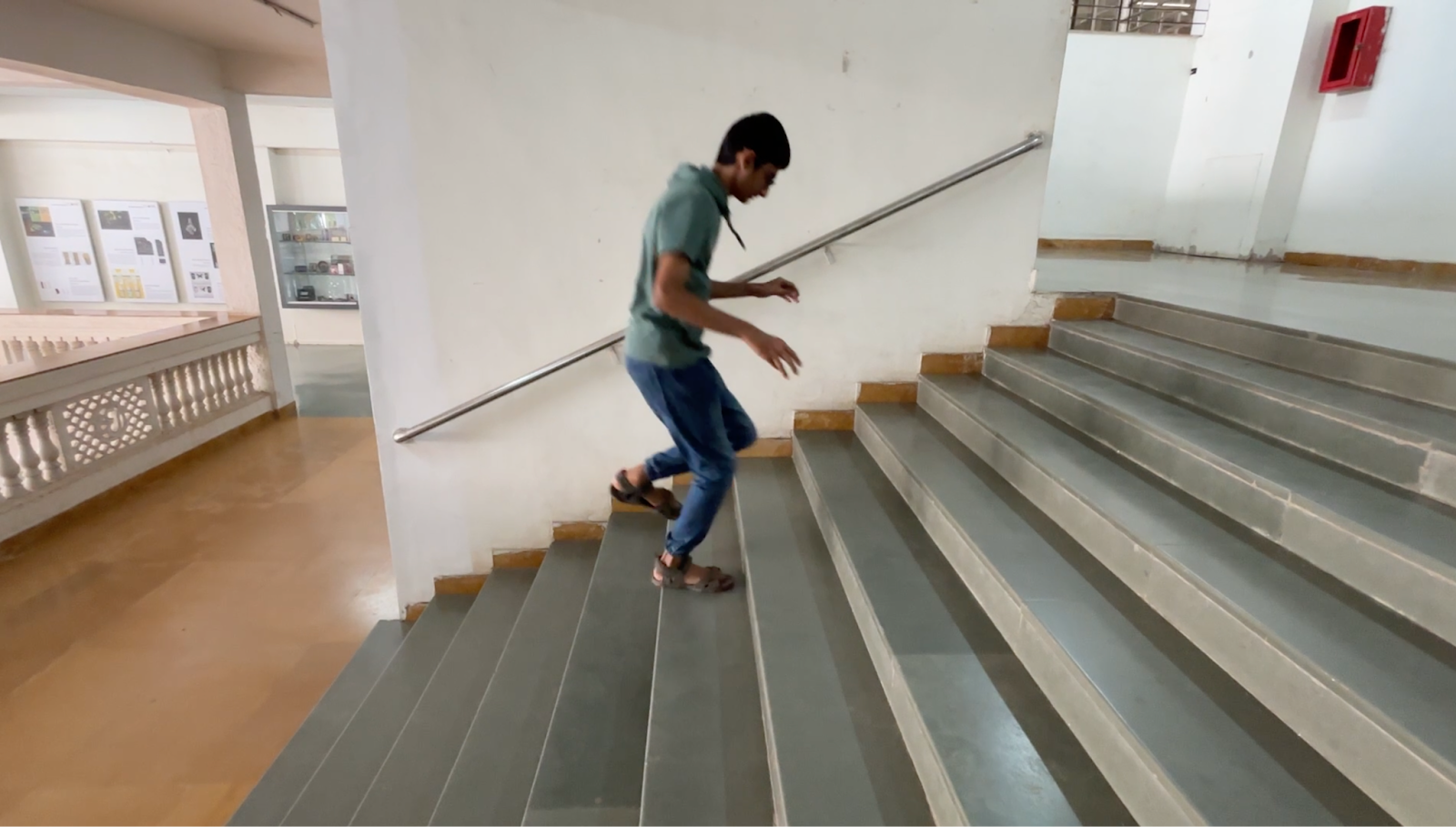
Collect movement data
Observe real-time movements and limitations in an AR environment.
 Recruiter Mode
Research paper · HCI India ’24
Stairway navigation for limb impairment — a springboard for inclusive design with AR.
Context
The study explores how augmented reality can help designers understand lower-limb movement during stairway navigation.
Research gap
Despite AR’s promise, research has paid limited attention to how it works across patient groups. The paper focuses on lower-limb rehabilitation and the role AR could play in understanding everyday mobility.
Problem
People with limb impairment still encounter inaccessible environments. The project asks how designers can better see and respond to those movement constraints.
Explore movement in context, then use that understanding to inform inclusive design.
Observe real-time movements and limitations in an AR environment.
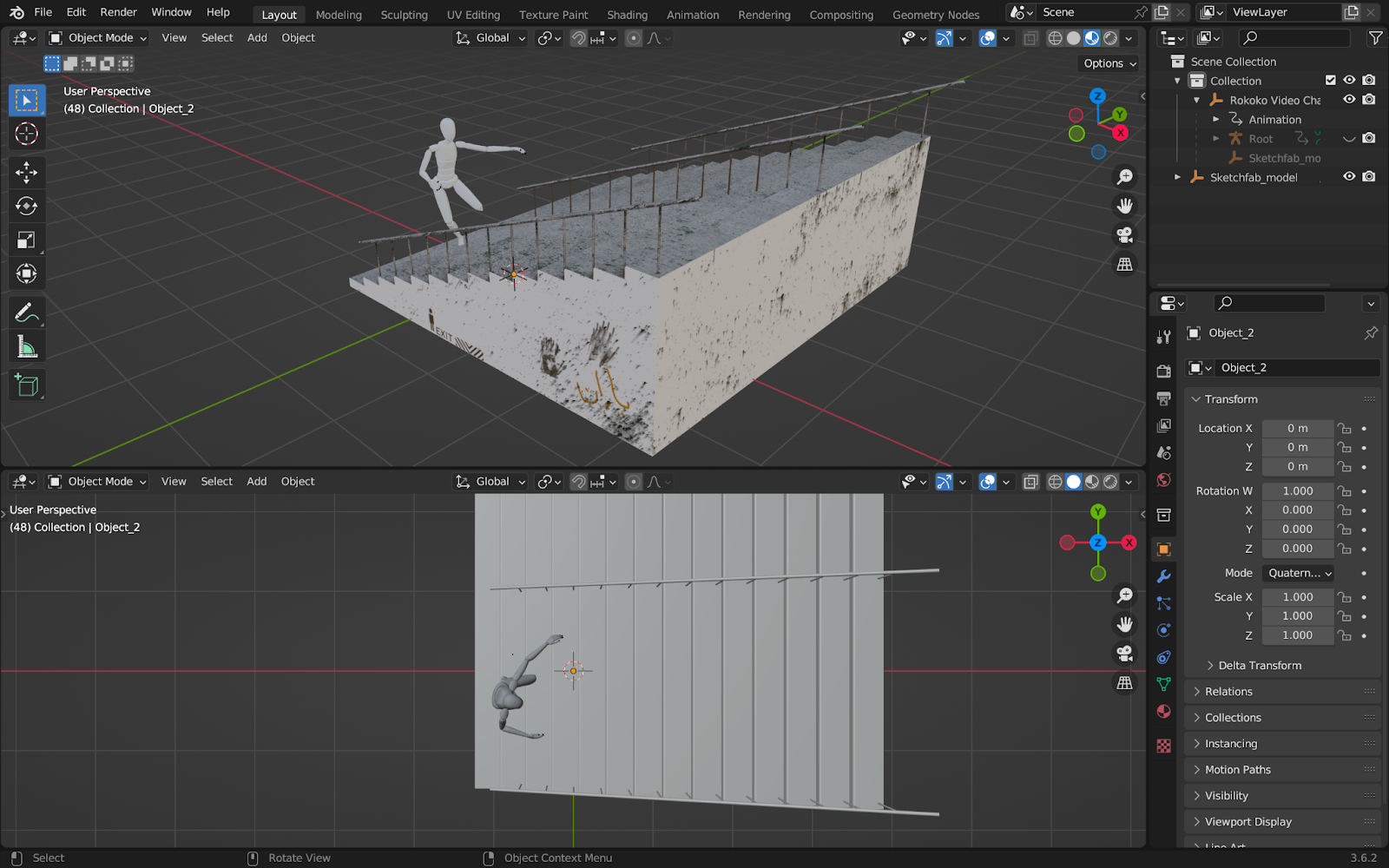
Visualize staircase and assistive-product ideas for iterative design.
What we did
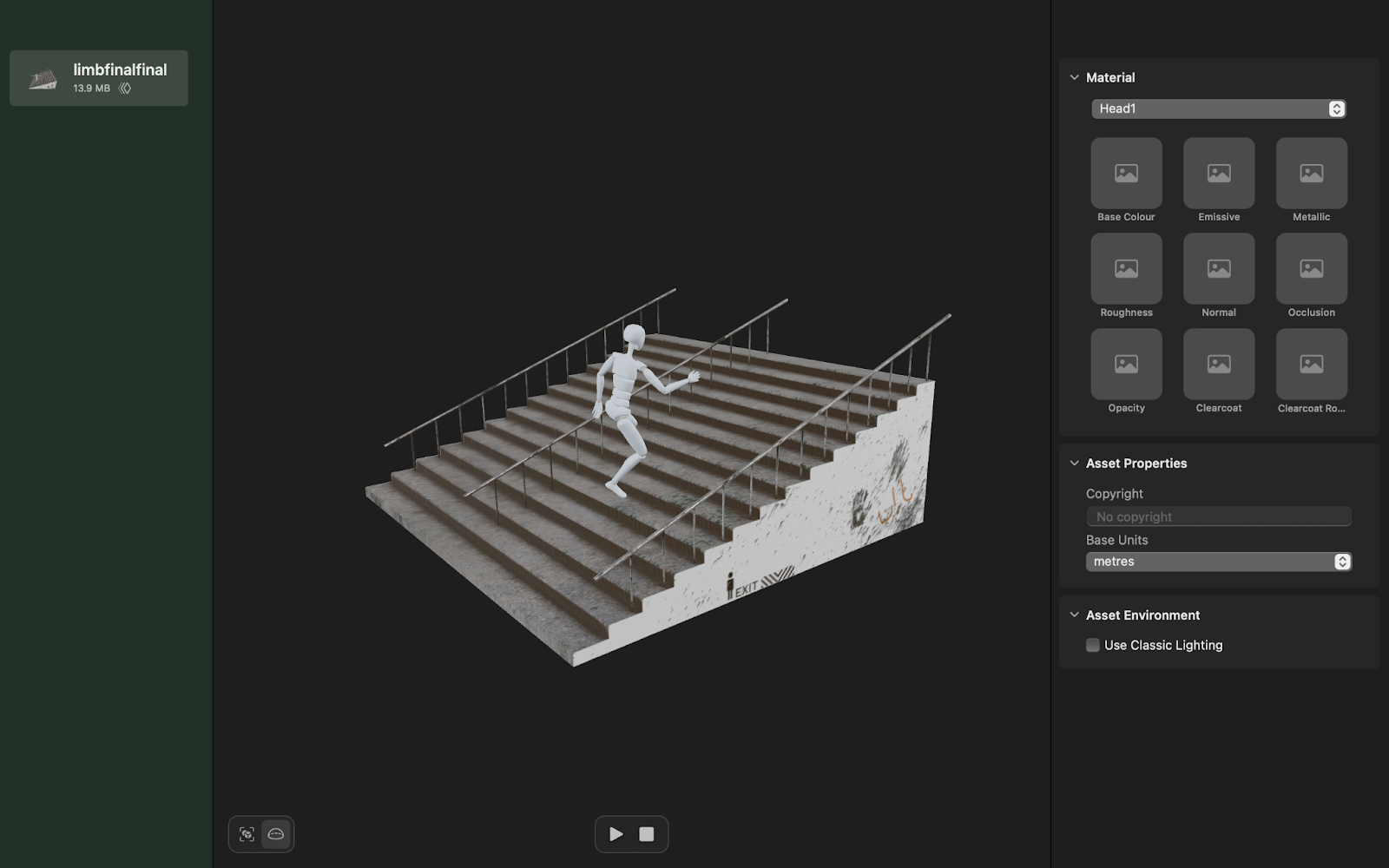
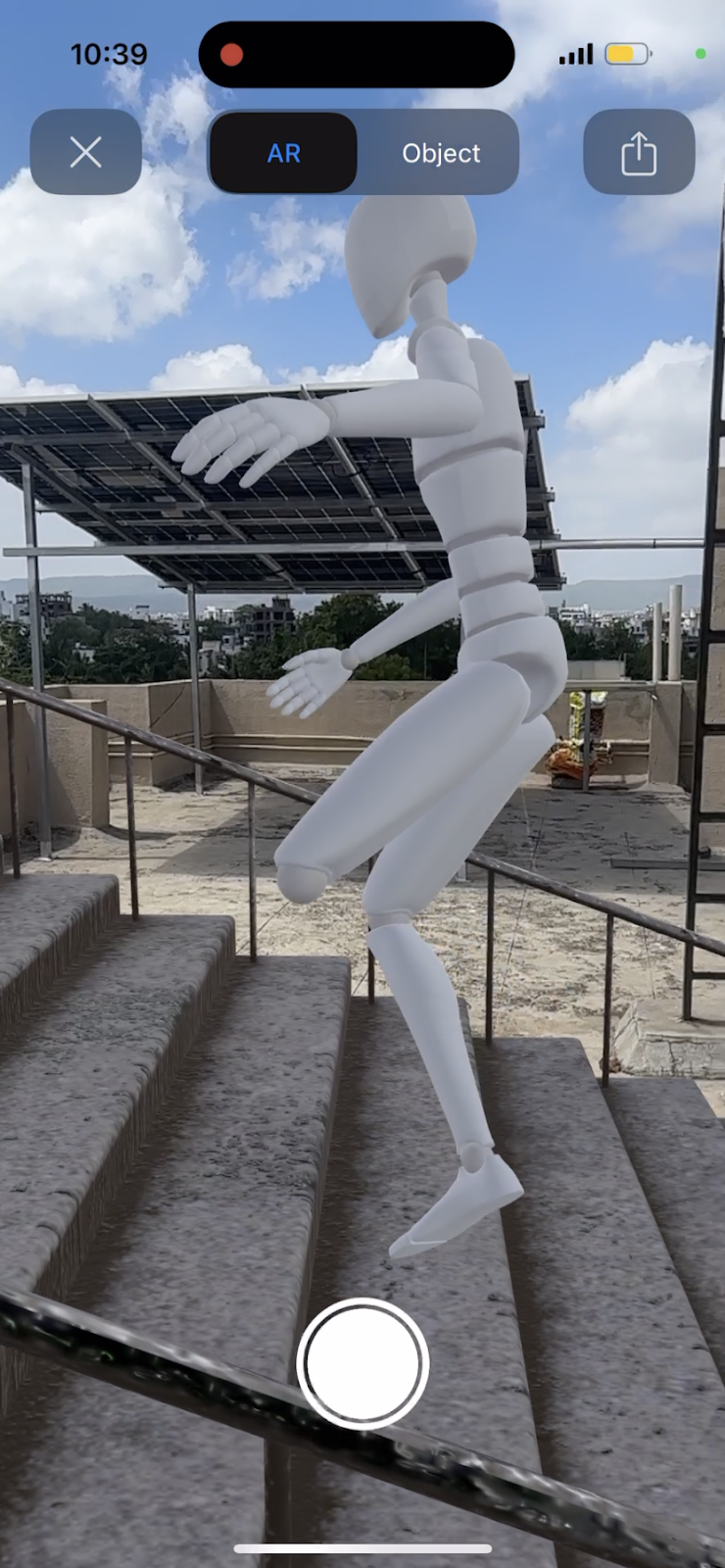
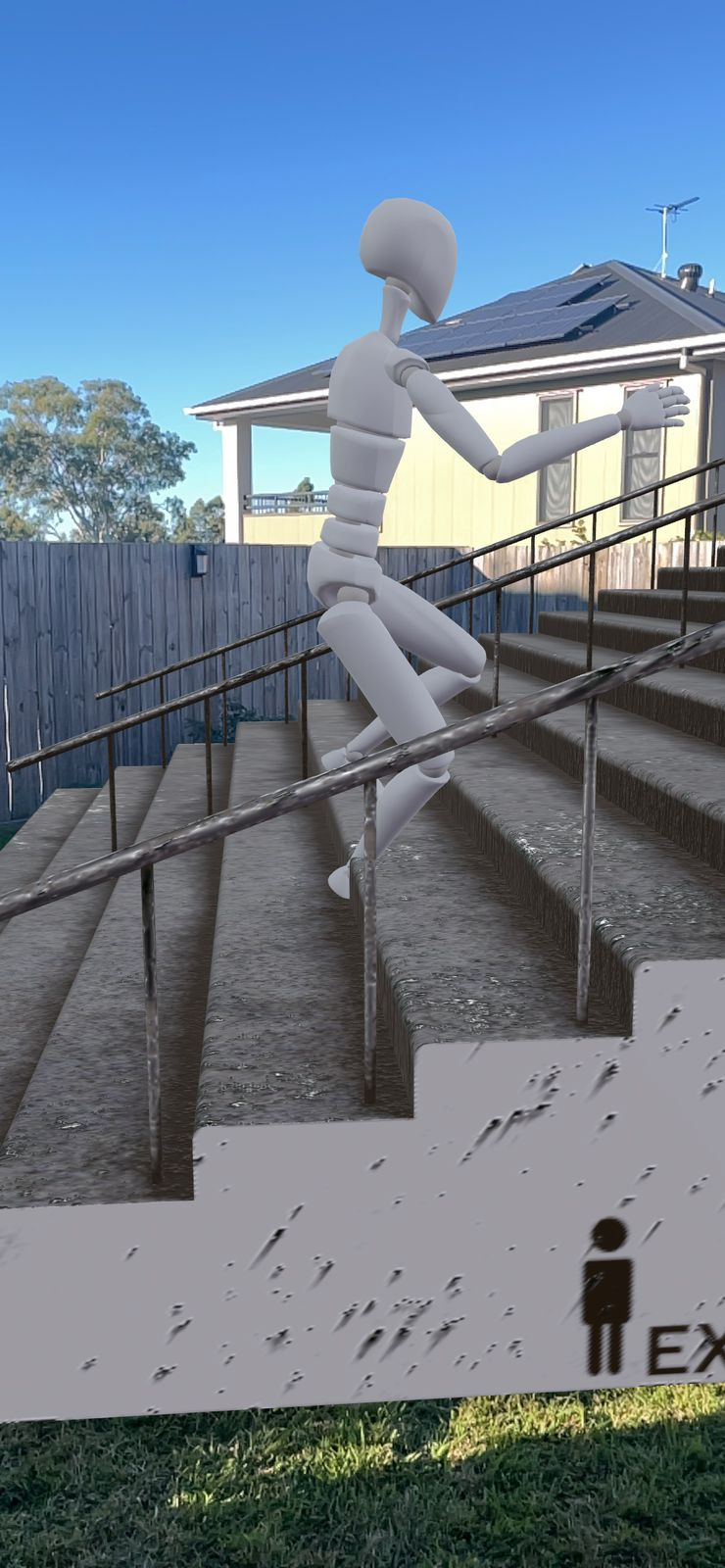
The team combined secondary research with motion capture, model refinement, and AR integration. The final USDZ animation can be viewed on an iPhone and inspected from different angles.
Biomechanics, HCI, and inclusive-design literature informed the conceptual framework, hypothesis, variables, and user-centered trial design.
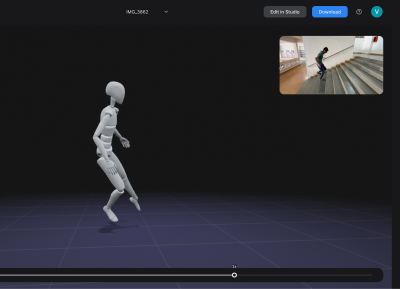
Rokoko Vision captured a simulated lower-limb amputee gait. A side camera angle improved the capture; Blender adjustments corrected tilt, removed a bent limb, aligned the staircase, and reduced jitter.
The refined FBX was converted to USDZ in Apple Reality Converter, then previewed with lighting before export.
Impact
The AR animation offers a way to inspect simulated movement in a stairway context. The paper presents the following as potential applications for future inclusive design work.
Inspect gait, balance, and step-related pain points.
Explore supports or grip changes with immediate visual feedback.
Use the simulation to review and refine design decisions.
Test usability and comfort in real-world settings.
Limitations
Limited experience with AR software created a steep learning curve for the team.
Capture and AR tools limited simulation fidelity.
Device constraints affected performance, smoothness, and realism.
Learnings
AR offers a way to explore mobility challenges in the environment where they occur.
Capture quality and model refinement shape how clearly a simulation communicates movement.
Future field testing can examine usability and comfort with people with disabilities.